Integrating an AI fundus camera clinical workflow into modern eye care practices is rapidly transforming how clinicians detect, monitor, and manage ocular and systemic diseases. As patient volumes increase and expectations for early detection grow, healthcare providers are adopting AI-powered imaging solutions to streamline diagnostics while improving accuracy. This evolution is not just about automation—it’s about equipping providers with intelligent tools that enhance clinical confidence and patient outcomes.
Why AI Fundus Camera Clinical Workflow Matters in Modern Eye Care
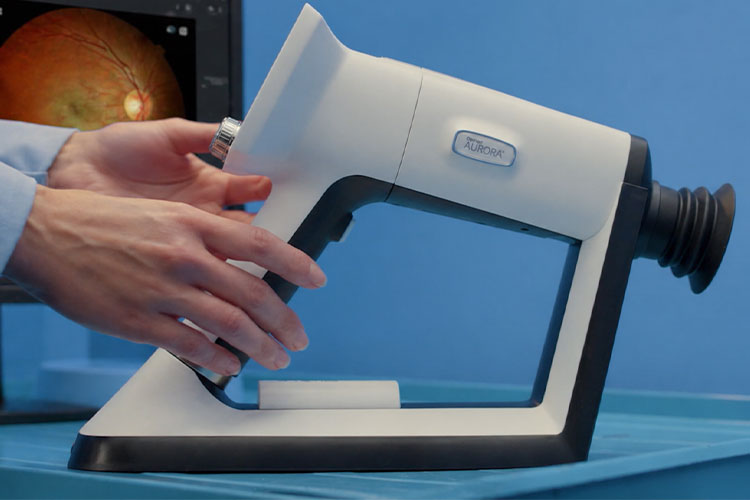
An optimized AI fundus camera clinical workflow allows practitioners to capture high-resolution retinal images and instantly analyze them using artificial intelligence. This integration supports earlier detection of conditions such as diabetic retinopathy, glaucoma, and age-related macular degeneration.
By embedding AI directly into routine exams, providers reduce reliance on manual interpretation alone and gain access to data-driven insights. Clinics leveraging solutions featured in BeamMed’s advanced imaging technologies are seeing measurable improvements in diagnostic efficiency and workflow consistency.
Streamlining Clinical Workflow with AI Integration
Incorporating AI into fundus imaging simplifies multiple stages of patient care. From intake to diagnosis, each step becomes more efficient and standardized.
- Faster Image Capture: Automated alignment and focus reduce technician variability.
- Instant Analysis: AI algorithms evaluate retinal images in real time.
- Clinical Decision Support: Highlighted abnormalities assist in faster diagnosis.
- Improved Documentation: Structured reports integrate seamlessly into EHR systems.
This streamlined AI fundus camera clinical workflow minimizes bottlenecks and enables clinics to see more patients without sacrificing quality.
Enhancing Diagnostic Accuracy and Early Detection
One of the most impactful advantages of an AI fundus camera clinical workflow is its ability to detect subtle retinal changes that may be overlooked during manual exams. AI models are trained on extensive datasets, allowing them to recognize early-stage disease patterns with high sensitivity.
Clinicians can utilize insights from BeamMed’s educational resources to understand how AI enhances detection rates across multiple conditions. This capability is particularly valuable in primary care settings where specialized ophthalmology expertise may not always be available.
Early detection leads to earlier intervention, which is critical for preserving vision and managing chronic diseases effectively.
Improving Patient Engagement and Outcomes
Patients are more likely to engage in their care when they can visually understand their diagnosis. AI-enhanced imaging provides clear, annotated visuals that clinicians can use to explain findings.
The AI fundus camera clinical workflow supports:
- Visual Education: Patients see real-time retinal images with highlighted concerns.
- Faster Results: Immediate feedback reduces anxiety and improves satisfaction.
- Proactive Care: Early identification encourages timely treatment adherence.
These benefits contribute to stronger patient-provider relationships and improved long-term outcomes.
Integration with Broader Clinical Systems
A well-implemented AI fundus camera clinical workflow does not operate in isolation. It integrates seamlessly with electronic health records, telehealth platforms, and population health management systems.
Solutions highlighted on BeamMed Inc.’s platform demonstrate how interoperability enhances operational efficiency. Clinics can easily store, retrieve, and share retinal data across departments or with specialists, enabling collaborative care models.
This integration is especially valuable for multi-location practices and healthcare networks aiming to standardize care delivery.
Scalability and Operational Efficiency
As healthcare organizations expand, maintaining consistent quality across locations becomes challenging. An AI fundus camera clinical workflow provides a scalable solution by standardizing imaging protocols and diagnostic criteria.
Clinics exploring innovations through BeamMed’s latest insights are adopting AI-driven tools to reduce variability and improve operational metrics. With AI handling repetitive analysis tasks, clinicians can focus more on patient interaction and complex decision-making.
This shift not only improves productivity but also reduces clinician burnout—a growing concern in healthcare environments.
Future-Proofing Eye Care Practices
The adoption of an AI fundus camera clinical workflow positions practices at the forefront of technological advancement. As AI continues to evolve, its capabilities will expand beyond detection to predictive analytics and personalized treatment planning.
Clinics investing in AI today are building a foundation for future innovations, including remote diagnostics and population-level disease monitoring. This proactive approach ensures long-term competitiveness and adaptability in an increasingly digital healthcare landscape.
Why Choose BeamMed Inc. for AI Imaging Solutions
BeamMed Inc. stands as a leader in delivering advanced diagnostic technologies that redefine clinical workflows. By integrating AI-powered fundus cameras into routine exams, BeamMed enables healthcare providers to achieve faster diagnoses, improved accuracy, and enhanced patient care.
Their solutions are designed with scalability, interoperability, and clinical precision in mind—making them an ideal partner for practices looking to modernize their operations. With a strong commitment to innovation and performance, BeamMed continues to support providers in implementing an optimized AI fundus camera clinical workflow that drives measurable results.
Frequently Asked Questions
How does an AI fundus camera improve clinical workflow?
AI fundus cameras automate image analysis and provide real-time diagnostic insights, reducing manual workload and improving efficiency during routine eye exams.
Can AI fundus cameras detect eye diseases early?
Yes, AI algorithms are trained to identify early signs of conditions like diabetic retinopathy and glaucoma, often before symptoms become noticeable to patients.
Is AI fundus imaging suitable for primary care settings?
AI fundus imaging is highly beneficial in primary care, as it enables non-specialists to perform advanced retinal screenings with reliable decision support.
Do AI fundus cameras integrate with electronic health records?
Most modern systems are designed for seamless integration with EHR platforms, allowing for efficient data storage, retrieval, and sharing across healthcare teams.